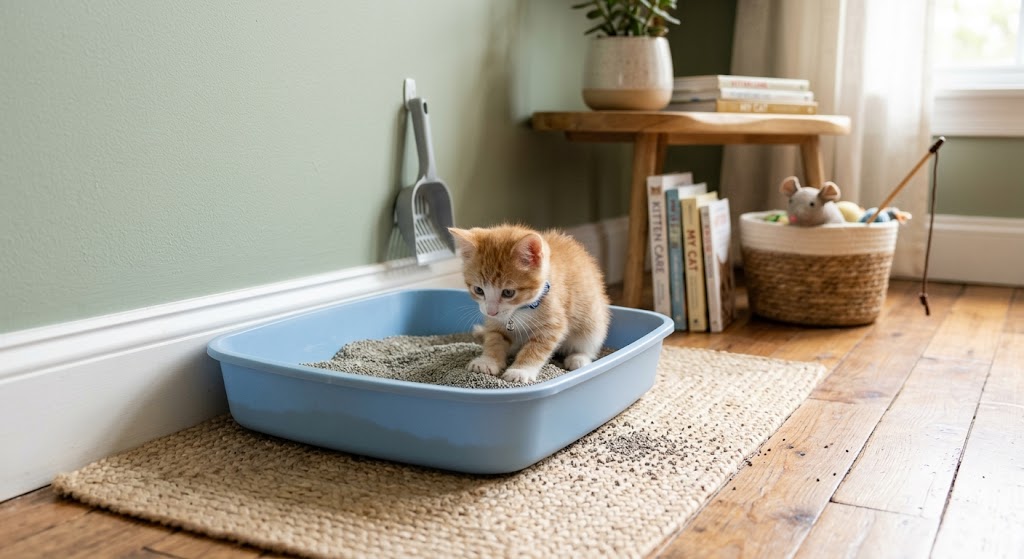
So your kitten pees right next to the box. Or she squats halfway in, halfway out, and you find a puddle on the tile that missed the rim by maybe two inches. You're not imagining it and you're not raising a dumb cat. In almost every case, a kitten missing the litter box comes down to one of three things: something about the box itself is wrong for her body, something in the litter or the room is stressing her out, or there's a medical issue like a urinary tract infection making the whole bathroom experience painful. Fix the right one, and the accidents usually stop within days, not weeks.
I want to say this upfront because so much advice online treats missed litter box incidents like a discipline problem, like the kitten needs a stern talking-to or some kind of retraining bootcamp. She doesn't. Cats don't miss the box out of spite or confusion. They miss because the geometry, the texture, or their own plumbing is working against them. Treat it like troubleshooting, not correction.
Why Does My Kitten Keep Missing the Litter Box?
Body Positioning and Box Geometry
Here's something people rarely think about: cats are oddly particular about footing. If the litter box has high sides, a narrow floor, or an entrance that's too tall for a small kitten to step over comfortably, her stance shifts the second she starts to go. She commits to the squat, her back feet slide or reposition, and the stream lands at the rim instead of the middle. This is especially common with kittens who haven't fully grown into their bodies yet. A box designed for a full-grown cat is often just the wrong shape for a four-month-old.
Litter Texture and Depth Problems
The second big driver is what's under her feet. If the litter is too shallow, she can't dig in and brace herself, and that lack of support changes her posture mid-business. If it's too fluffy or slick, like it's collapsing or sliding when she presses down, the same thing happens. I've seen this play out with a cat who hit the front edge of her tray like clockwork, not because she disliked the box but because her instinctive bracing spot happened to be exactly where the litter behaved like a slippery trampoline. Switching to a litter that holds its shape under pressure, rather than one that scatters, often solves this within a day or two.
Stress or Unsafe Bathroom Location
Kittens rush when they feel unsafe. A box shoved into a high-traffic hallway, next to a noisy washing machine, or somewhere a dog or a toddler might barge in mid-squat, means she's not settling into a normal, deliberate stance. She's listening for danger instead of focusing on aim. According to insights from Scott County Vet, psychological stress from environmental change or conflict in a multi-cat household is a leading catalyst behind elimination changes in young cats. A kitten who feels boxed in, literally and figuratively, will often still use the tray, just sloppily.
When Is a Missed Litter Box a Medical Problem?
Urinary Tract Infections and Painful Urination
If your kitten is straining, vocalizing while she pees, or visiting the box constantly with little to show for it, that's not a behavior quirk. That's pain. Persistent accidents can point toward lower urinary tract disease or bacterial cystitis, according to guidance from Hill's Pet Nutrition, and a kitten in pain will often associate the box itself with that pain, leading her to go just outside it instead.
Feline Interstitial Cystitis and Urgency
There's a specific condition worth knowing about here: feline interstitial cystitis. As the ASPCA explains it, the condition can cause a cat to eliminate outside her box because of the urgency to urinate combined with the pain involved in the act itself. It's not a litter preference issue at all. It's a bladder issue wearing a behavior costume.
Parasites, Diarrhea, and Bladder Inflammation
Loose stool from parasites or dietary upset changes everything about how a kitten uses the box. She may not make it in time, or she may associate sudden urgency with the box being "the place where bad things happen." Bladder inflammation, kidney stones, and even early kidney failure in rare cases can all show up first as a change in elimination habits, which is exactly why sudden, unexplained lapses deserve a real look rather than a shrug.
How Do You Tell Behavioral Misses From Medical Ones?
Signs That Point to a Vet Visit
Straining, blood in urine, crying while urinating, frequent tiny trips to the box, or a sudden total aversion to the box after months of normal use. Diarrhea, visible discomfort, or a kitten who seems to avoid the box like it burned her.
Signs That Point to Box Setup Issues
Consistent near-misses at the same spot on the rim, urine or stool landing just outside a specific edge, or reluctance to fully enter a covered tray while still using an open one nearby without issue.
When to Schedule a Veterinary Exam
The SF SPCA is blunt about this in their litter box problems guide: any sudden elimination lapse warrants a physical exam, urinalysis, and blood work before you assume it's behavioral. I'd rather a reader spend forty dollars ruling out a UTI than spend three weeks buying different litters while a treatable infection gets worse.
What Litter Box Size and Shape Work Best for Kittens?
Box Feature | Why It Matters for Kittens |
|---|---|
Low entry height | Small kittens can't always step over tall sides without shifting stance mid-squat |
Open top | Reduces hesitation at a threshold and improves airflow so odors don't build up |
Larger floor area | Lets a kitten turn and brace naturally instead of cramping her body to fit |
Shallow but not empty litter bed | Gives paws something to grip without forcing an awkward climb |
Low Entry vs. High-Sided Boxes
A box with sides too high for her to step over cleanly forces a kind of half-jump entry, and that changes how she settles once inside. Low-entry trays let her walk in the way she'd walk into any other room, which sounds trivial until you watch how much it changes her aim.
Adding a Step for Small or Mobility-Limited Kittens
For tiny kittens, or ones recovering from something like declaw pain (which, for the record, is a real and often underestimated source of litter box avoidance since it makes digging and scratching painful), a small step or ramp outside the box removes the awkward hop that otherwise throws off her landing position.
Open Trays vs. Covered Boxes
A hooded tray traps odor inside, which might sound like a bonus for you but often reads as a warning sign to her. The Oregon Humane Society puts it well with a simple rule of thumb: if a human can smell the box, it's already offensive enough to repel a cat. Covered boxes also limit her sightlines, and kittens who feel like they can't see an exit route tend to rush.
Where Should You Place the Litter Box?
Quiet, Low-Traffic Locations
Corners of quiet rooms beat hallways and laundry closets every time. A kitten needs to feel like nothing's going to surprise her mid-squat.
Distance From Food and Sleeping Areas
Cats don't toilet near where they eat or sleep. It's instinctive, not fussy. Keeping the food bowl and the tray on opposite sides of the room, or in separate rooms entirely, respects that instinct instead of fighting it.
One Box Per Kitten Plus One Extra
The standard formula in a multi-cat household is one box per cat plus one additional box, placed in separate locations rather than side by side. The Animal Humane Society notes this matters even more for very young or tiny rescues, who need shallow, low-sided boxes they can safely access without straining, and having options nearby reduces the odds of one kitten guarding or blocking access to the only tray in the house.
How Do You Fix a Kitten's Litter Box Habits?
- Switch to a fine-textured, unscented clumping litter, which the ASPCA specifically recommends over scented or coarse alternatives for reducing aversion.
- Add roughly two to three inches of litter depth so she has enough material to brace against.
- Move the box to a quiet corner away from appliances, doors, and other pets.
- Clean solid waste at least once daily and do a full litter change on a consistent schedule, since dirty boxes are one of the most common drivers of avoidance.
- Use an enzymatic cleanser on any accident spots so residual scent doesn't pull her back to the same wrong location.
Reset the Litter Type and Depth
If you've recently changed brands or textures, that alone might explain the sudden mess. Cats form litter preferences early, and a switch from a soft clumping litter to something coarse or scented can trigger avoidance overnight.
Clean Consistently Without Over-Cleaning
There's a balance here. A filthy box repels her, but a box scrubbed with heavy-scented cleaner every day can be just as off-putting, since it introduces a strange chemical smell into what should be a neutral space. Scoop daily, wash weekly with mild soap, skip the perfume.
Rule Out Stressors Before Retraining
Before you rearrange anything, ask what changed. New pet? New furniture blocking the usual path? A recent move? The Peninsula Humane Society & SPCA points out that kittens also benefit from a predictable elimination window, generally within thirty minutes of eating or active play, so timing her trips to the box around those windows can rebuild a clean association faster than random retraining attempts.
What Litter Training Mistakes Should You Avoid?
Punishing a kitten for an accident tops the list, and it's a bigger mistake than most people realize. Humaneworld stresses that kittens act out of unmet needs, not defiance, so scolding her after the fact just teaches her to hide when she goes, not to use the box correctly. Other common missteps include changing multiple variables at once (new litter, new location, and a new box all in the same week) which makes it impossible to know what actually worked, and assuming a covered box is automatically better when plenty of kittens do worse with one.
How Do You Make the Litter Box Feel Safe to Your Kitten?
Safety, to a kitten, is mostly about predictability and escape routes. A box she can see out of, in a spot with no ambush potential from a dog or another cat, in a room that doesn't randomly get loud. Some households find a synthetic pheromone diffuser near the litter area takes the edge off general household tension, especially in homes with more than one cat where subtle territorial conflict might be affecting who feels comfortable using which tray.
What Are Other Signs of Inappropriate Elimination to Watch For?
Urine marking on vertical surfaces is a completely different animal from a missed litter box, and it's worth knowing the difference. The San Francisco SPCA draws a clear line between the two: marking is a small amount of urine sprayed on a vertical surface, usually tied to territorial stress, while inappropriate elimination is a full bladder or bowel emptied flat on a horizontal surface like carpet or a floor mat. If you're seeing the vertical kind, the fix has almost nothing to do with the box setup and everything to do with reducing household conflict.
FAQ
Is it normal for an 8-week-old kitten to miss the litter box sometimes? Yes, especially if the box sides are too high for her size. This usually resolves once you switch to a lower-entry tray suited to her current size rather than a full adult box.
Can stress alone cause a kitten to stop using the box entirely? Yes. Sudden changes like a new pet, a move, or even rearranged furniture can trigger a temporary aversion even with zero medical cause.
Should I use a litter box liner or mat? A mat outside the box helps catch stray litter, but liners inside the box can catch claws and actually discourage digging, which affects her stance and bracing.
How many boxes do I need for one kitten? One is the minimum, but two in different locations gives her options and reduces the odds of one becoming inconvenient or ignored.
Conclusion
A kitten missing the litter box isn't a mystery that requires patience and hope so much as it requires observation. Watch where the mess lands, watch how she enters and exits the box, and watch for any sign of straining or discomfort that points toward a UTI or bladder issue rather than a setup problem. Most of the time, the fix is embarrassingly simple: bigger box, better litter, quieter corner. She was never the problem. The box was.
More Articles

New Puppy Will Not Stop Biting: What Actually Works
New puppy will not stop biting? Discover why common fixes fail and what actually works to stop the nipping for good.
Read more →
Why Is My New Puppy Crying at Night and How to Help
Puppy crying at night? Discover the real reasons why and get proven, vet-informed tips to help your new puppy sleep soundly through the night.
Read more →
What to Do on the First Night With a New Puppy
Your first night with a new puppy doesn't have to be stressful. Get our real-world tips for a calmer night and easier bonding from day one.
Read more →