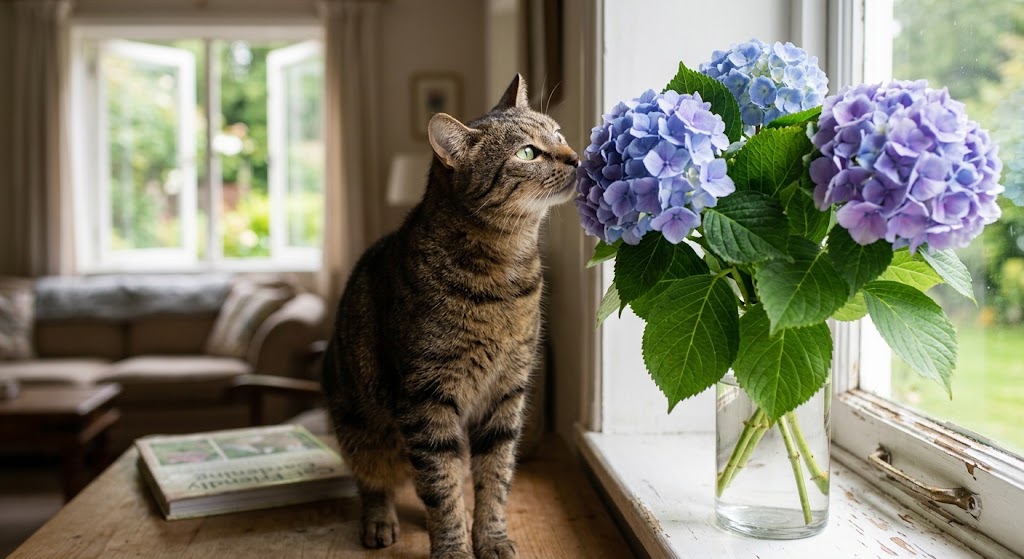
Your cat just took a curious bite out of that gorgeous hydrangea bush by the porch. Should you panic, call the vet, or just keep an eye on things?
Here's the short version: yes, hydrangeas are poisonous to cats, but the story is a bit more nuanced than a flat "toxic" label suggests.
Most cats that nibble a leaf or petal end up with an upset stomach rather than a life-threatening emergency. Still, if you own cats and love hydrangeas, you need to understand exactly what you're dealing with, because a small number of cases do turn serious.
This guide breaks down everything a cat owner actually needs: why hydrangeas are toxic, what symptoms look like, how much is genuinely dangerous, and what to do the moment you catch your cat mid-nibble.
Quick Answer: Are Hydrangeas Poisonous to Cats?
Yes. Hydrangeas are toxic to cats, and all parts of the plant contain compounds that can cause vomiting, diarrhea, and, in rare cases, serious poisoning.
The ASPCA classifies all varieties of hydrangea, including the common Hydrangea macrophylla or hortensia, as moderately toxic to cats, dogs, and horses.
That word "moderately" matters. This isn't a plant on the same danger tier as lilies, which can shut down a cat's kidneys after minimal exposure. It's closer to a plant that causes digestive misery when eaten in quantity, with a small but real risk of something worse.
Why Are Hydrangeas Toxic to Cats?
The toxicity comes down to one group of natural compounds.
The ASPCA lists cyanogenic glycoside as the toxic principle in hydrangeas, with clinical signs including vomiting, depression, and diarrhea.
Here's what that actually means for your cat's body. This beautiful shrub contains a chemical called cyanogenic glycosides, which can be found in a wide variety of plants and is actually not toxic in its natural form, but when it becomes metabolized by the body, it produces cyanide.
Some sources refer to the specific compound as amygdalin, others use the name hydrangin. Either way, it's a cyanogenic glycoside that is also toxic in dogs, horses, and livestock, not just cats.
Once your cat chews the plant tissue, an enzymatic reaction kicks in. When ingested, these glycosides undergo a reaction with the body's water, producing hydrocyanic acid which robs cells of oxygen.
That's the mechanism behind cyanide poisoning, and it's why vets take any ingestion seriously even though full-blown cyanide toxicity is genuinely uncommon in cats.
The Cyanide Connection, Explained Simply
Cyanide sounds terrifying, and technically it is a potent toxin. But context matters here.
Cyanide intoxication is rare, and usually produces more of a gastrointestinal disturbance rather than full systemic poisoning.
In other words, the cyanide compound is present, but the dose a cat typically ingests from a curious nibble rarely reaches the threshold needed to cause the dramatic symptoms associated with cyanide poisoning in textbooks. Your cat's stomach usually reacts first and loudest.
Which Parts of the Hydrangea Are Most Dangerous?
If you're hoping one part of the plant is "safe" to leave lying around, I've got bad news.
All parts of the hydrangea plant are toxic, but the highest concentration of the toxic compound is found in the leaves and flowers.
That lines up with veterinary toxicology data more broadly. The buds and leaves of the plant contain cyanogenic glycosides called amygdalins, and when these glycosides are digested, they mix with water and release hydrocyanic acid inside the body.
A few points worth flagging for cat owners:
- Leaves and flower heads carry the heaviest concentration of toxins.
- Stems and bark contain lower but still present levels.
- Dried or preserved arrangements don't lose their toxicity. Dried hydrangeas are still unsafe if eaten, and preserved arrangements may contain added chemicals that create additional risk.
- Every hydrangea variety counts. The ASPCA's Toxic and Non-Toxic Plants database confirms that all hydrangea species, including bigleaf, oakleaf, panicle, and smooth hydrangeas, are toxic to cats.
So swapping your bigleaf hydrangea for an oakleaf variety won't solve the problem. They're all in the same toxic family.
Symptoms of Hydrangea Poisoning in Cats
This is the part every cat owner actually needs memorized, because recognizing symptoms early changes outcomes.
Mild to Moderate Signs
Most cases stay in this category. Mild hydrangea poisoning typically shows up as temporary digestive upset, where your cat might vomit once or twice, show less interest in food for a day, or seem slightly less playful than usual.
Common early symptoms include:
- Vomiting
- Diarrhea
- Drooling
- Loss of appetite
- Lethargy or low energy
- Mild abdominal discomfort
Some hypersensitive cats might even show skin reactions upon direct contact with the plant, including redness, swelling, or itchiness.
Severe Symptoms That Need Immediate Attention
Rare, but this is the scenario that justifies a same-day vet visit rather than a wait-and-see approach.
Seek emergency veterinary care if your cat shows continuous vomiting more than twice in a few hours, persistent diarrhea, extreme low energy, difficulty breathing, or collapse after eating hydrangeas.
More serious signs documented in veterinary literature include:
Breathing difficulties can occur because hydrocyanic acid deprives cells of oxygen, potentially leading to respiratory distress, limb stiffness can appear as a neurological effect of the toxins, and in severe cases the neurotoxic effects can escalate to seizures.
If you see any of the above, this isn't a "call in the morning" situation. Get your cat to an emergency vet.
How Much Hydrangea Does It Take to Poison a Cat?
Here's where cat owners can breathe a little easier, at least partially.
Luckily, a cat would have to ingest quite a bit of hydrangea for it to be in real danger.
Vets and toxicology sources back this up consistently. The good news is that hydrangea poisoning in cats is rare, because your kitty would need to eat a lot of the plant to become poisoned by it.
But don't get too comfortable, because body size changes the math significantly. Your cat's symptoms will depend on how much they've eaten and their size, and smaller cats are at higher risk of poisoning since they have to eat less than larger cats to become ill.
That means kittens and petite adult cats are more vulnerable than a hefty 15-pound tomcat, even at the same "bite size" of plant material.
There's also an honesty gap in the research worth mentioning. It's not known exactly how much of the hydrangea shrub or flowers a cat would need to eat to cause severe toxicity, and due to this unknown along with the fast-acting nature of the toxin, pet parents should bring their cat to the vet to rule out cyanide poisoning after any ingestion.
In plain terms: nobody can give you a safe "one bite is fine" number, so treat every ingestion as worth a phone call, even if the plant seems small.
What to Do If Your Cat Eats a Hydrangea
Don't wait for symptoms to escalate before acting. Here's the actual step-by-step response vets recommend.
- Remove your cat from the plant. Stop further ingestion immediately.
- Check the mouth and paws. Remove any plant material from the cat's mouth.
- Don't induce vomiting on your own. Don't induce vomiting at home in your pet if they have ingested hydrangea. This advice is repeated across veterinary sources for good reason. Do not attempt to induce vomiting unless explicitly instructed to do so by a veterinarian, because incorrectly inducing vomiting can cause more harm than good.
- Offer water. Offer fresh water to help flush toxins from the system.
- Call your vet or a poison hotline right away. Call your vet or Pet Poison Helpline at 855-764-7661 if ingestion occurs. You can also reach the ASPCA Animal Poison Control Center directly. If you suspect your pet may have ingested a potentially toxic substance, call ASPCA Poison Control at (888) 426-4435 or contact your local veterinarian as soon as possible.
- Monitor closely for the next 12 to 24 hours, even if your cat seems fine at first.
That last point trips people up. Cats are experts at masking discomfort, and a "wait and see" attitude can delay treatment for the rare severe case.
Treatment and Recovery Outlook
The good news for anxious cat owners: outcomes are generally favorable when caught early.
Most cats recover fully from hydrangea poisoning if treated quickly.
Veterinary treatment usually focuses on supportive care rather than dramatic intervention: fluids to combat dehydration from vomiting and diarrhea, anti-nausea medication, and monitoring vital signs for a period of hours. In genuinely severe cyanide-related cases, more intensive hospital treatment may be needed, but this remains uncommon.
Are Some Cats More at Risk Than Others?
Yes, and it's not just about size. Cats explore the world with their mouths and paws, which creates a compounding exposure risk that many owners don't consider.
Cats lack robust detoxification pathways for many plant compounds compared to other species, and their instinctive grooming behavior increases exposure, since a cat may nibble a leaf, then lick its paws, re-ingesting toxins and absorbing them transdermally.
That grooming habit is a genuinely under-discussed risk factor. Even a cat that just brushes against hydrangea leaves without eating them can end up ingesting trace amounts later during a grooming session.
Seasonal timing matters too. Garden centers and vet clinics both report a predictable pattern each year. One veterinary toxicology source notes a roughly 40% spike in hydrangea-related calls every May and June, the peak bloom and pruning season.
If you're a cat owner who also gardens, late spring and early summer are exactly when you need to be most vigilant, right when hydrangeas are at their most tempting and freshly trimmed clippings are lying around.
Keeping Cats Safe Around Hydrangeas
You don't necessarily have to rip out your entire garden. A few practical adjustments go a long way.
For Outdoor Hydrangeas
- Physical barriers. A low decorative fence or chicken wire ring around the base keeps most cats from getting close enough to chew.
- Motion deterrents. If the plant is outside, you can install a motion activated sprinkler to discourage cats from lingering nearby.
- Strategic pruning. Keeping the plant pruned to a height that's less interesting to a cat can reduce curiosity, though results vary by individual cat.
- Clean up trimmings immediately. Fallen leaves and cut stems are just as toxic as the growing plant, so don't leave clippings where a cat can find them.
For Indoor Hydrangeas and Bouquets
This is genuinely where most poisoning cases happen, not the garden. Decorating a bedroom with hydrangeas may look beautiful, but it's not recommended in a cat household, because cats can easily jump onto nightstands, dressers, or windowsills where hydrangeas are kept, and even a curious nibble during the night could cause poisoning.
If a hydrangea arrives as a gift or you've bought one for the house, the simplest fix is often the right one. If the hydrangea is an inside houseplant, regifting it or moving it somewhere your cat truly cannot access is the safest call.
Cat-Safe Flower Alternatives
Nobody wants a flowerless home just because they share it with a cat. Thankfully there are plenty of options that give you that same garden or vase appeal without the risk.
Try cat-safe flowers such as orchids, sunflowers, or roses instead, and you'll still get vibrant décor without the risk.
Other cat-friendly picks worth considering for both indoor arrangements and garden beds:
- Sunflowers
- Roses (thorns aside, the petals themselves are non-toxic)
- Orchids
- Snapdragons
- Marigolds
- Zinnias
Always double-check any new plant against the ASPCA's toxic and non-toxic plant list before bringing it home. Plant names vary regionally, and "safe" claims online aren't always accurate.
Other Toxic Plants Cat Owners Should Know About
Hydrangeas rarely travel alone in a garden, so it's worth knowing what else might be lurking near them.
Several household plants are particularly dangerous for cats due to high toxicity levels, including lilies which can cause severe kidney damage, sago palm whose seeds can lead to liver failure, tulip and daffodil bulbs which can cause vomiting and respiratory issues, and oleander which can affect the heart and cause severe symptoms.
Lilies deserve a special callout here since they're commonly paired with hydrangeas in bouquets. Lilies are especially dangerous, as even small amounts can cause severe kidney damage in cats.
If you're auditing your home for cat safety, don't stop at the hydrangea. Check every plant on your windowsills, in your garden beds, and in any bouquet that comes through your front door.
Conclusion
So, are hydrangeas poisonous to cats? Yes, without question. Every part of the plant carries cyanogenic glycosides that can trigger vomiting, diarrhea, and, in rare instances, more serious cyanide-related symptoms.
The reassuring part is that most cases stay mild. Cats generally need to eat a meaningful amount of leaf or flower material before real danger sets in, and full recovery is the norm when owners act quickly.
Your job as a cat owner isn't to panic every time your cat wanders near a hydrangea bush. It's to know the warning signs, keep indoor arrangements out of reach, clean up garden trimmings promptly, and have your vet's number and the ASPCA Poison Control line saved somewhere you can find them fast.
A little prevention and a clear action plan go a lot further than fear. Keep the beautiful blooms if you want them, just keep them where curious paws and mouths can't reach.
Frequently Asked Questions
Can a small nibble of hydrangea kill my cat?
Extremely unlikely. Hydrangea poisoning in cats is rare because a cat would need to eat a lot of the plant to become poisoned by it. A single small nibble typically causes, at most, mild stomach upset. Still, call your vet to be safe since dosage thresholds aren't precisely known.
What are the first signs I should watch for after my cat eats hydrangea?
Watch for vomiting, diarrhea, drooling, and reduced appetite within the first few hours. Gastrointestinal distress is one of the most immediate and common signs, and affected cats may vomit frequently and have episodes of diarrhea.
Are dried or preserved hydrangeas safe to keep around cats?
No. Dried hydrangeas are still unsafe if eaten, and preserved arrangements may contain added chemicals that create additional risk. Treat dried stems exactly as you would fresh ones.
Is any hydrangea variety safer than others for cat owners?
No. All hydrangea species, including bigleaf, oakleaf, panicle, and smooth hydrangeas, are toxic to cats according to ASPCA data, so switching varieties won't remove the risk.
Should I induce vomiting if my cat eats hydrangea?
No, don't do this without direct veterinary instruction. Do not attempt to induce vomiting unless explicitly instructed to do so by a veterinarian, because incorrectly inducing vomiting can cause more harm than good. Call a vet or poison helpline first.
What flowers can I safely grow instead of hydrangeas if I have cats?
Sunflowers, roses, orchids, snapdragons, marigolds, and zinnias are generally considered cat-friendly choices. Cat-safe flowers such as orchids, sunflowers, or roses give you similar visual impact without the toxicity risk. Always verify against the ASPCA's current plant list before purchasing.