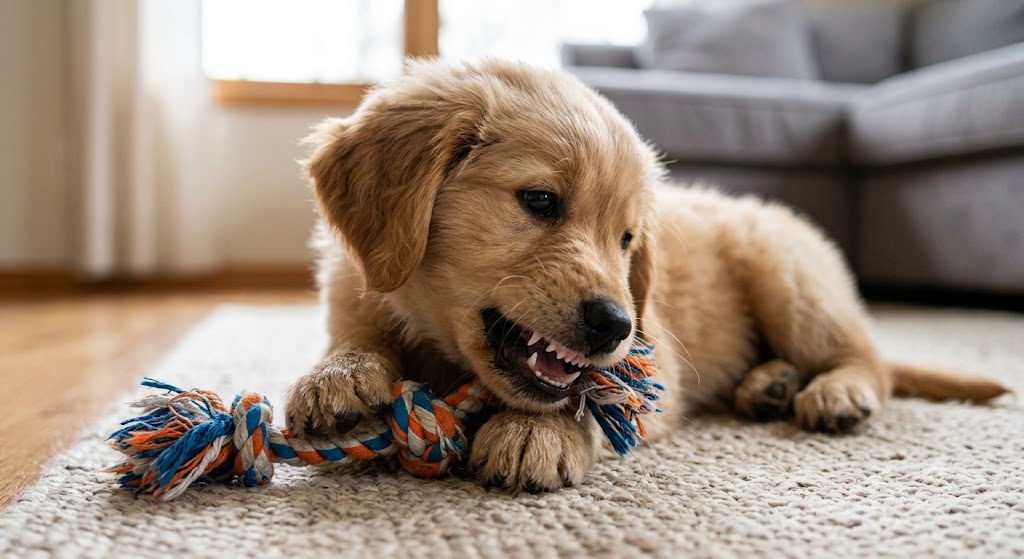
Your hand looks like a chew toy right now, doesn't it? Those little needle teeth are locked onto your knuckle, your puppy's tail is wagging like a metronome gone haywire, and some part of you is wondering if you brought home a shark with fur instead of a dog. Breathe. This is not a broken puppy. This is, frankly, just about the most predictable phase of canine development there is, and the fact that it feels endless doesn't mean it actually is.
Puppy biting is a normal developmental behavior rooted in teething, exploration, and play, not a sign that your pup is aggressive or that you've somehow failed at raising a dog. Every puppy goes through it. The ones who don't get corrected properly just carry sharper habits into adulthood. So the question isn't really "why is this happening to me," it's "what do I do about it right now, today, with this specific pup on my kitchen floor."
Why Won't My Puppy Stop Biting?
Because biting is how puppies process the entire world. They don't have hands. They don't have the fine motor skills of a raccoon rummaging through a trash can. What they have is a mouth, and that mouth is doing the job your fingers do for you, testing textures, testing boundaries, testing you.
Teething And Exploration
Somewhere between three and six months, a pup's baby teeth, the deciduous teeth, start loosening up and giving way to permanent teeth, and that process is uncomfortable in the same dull, itchy, gum-aching way it was for you as a kid losing teeth. Chewing relieves that pressure. Puppies will gnaw on furniture legs, shoelaces, your favorite throw pillow, and yes, your hand, because the sensation of pressure against sore gums genuinely feels better than not chewing at all. On top of that, mouthing is exploration. A pup doesn't know what a sock is until she's tasted it, turned it over with her tongue, and decided whether it's food, toy, or trash. Cornell veterinarian Dr. Brian Collins has pointed out that puppy chewing functions as an instinctual investigative method, not defiance, which is worth remembering the next time you're tempted to take it personally.
Play And Predatory Drift
Watch two puppies wrestle in a yard and you'll see the blueprint. Play biting mimics the hunting behaviors baked into every dog's genetics, the chase, the grab, the shake. When your pup lunges at your ankle or clamps onto your sleeve during a rowdy play session, that's predatory drift showing up in a domesticated, mostly harmless form. It's not aggression. It's rehearsal. Herding breeds in particular tend to target moving ankles and pant legs, which is exactly why a family with a Border Collie pup deals with a different flavor of nipping than a family with a Labrador.
Overtiredness And Overstimulation
Here's the pattern almost every new owner misses: the worst biting sessions happen right before a nap, not during peak energy. A tired puppy running on fumes turns into what a lot of owners jokingly call a land shark, and that phrase exists for a reason. Overstimulation lowers a pup's impulse control, the same way an overtired toddler melts down at a grocery store checkout line. Puppy owners who track the timing of bite escalation almost always find it clusters around missed nap windows.
Is My Puppy's Biting Normal Or A Sign Of Aggression?
Most of what looks alarming is completely ordinary. But not all of it. Knowing the difference matters, because treating aggression like play, or treating play like aggression, sets your training up to fail from the start.
Signs Of Normal Mouthing
A playful nip usually comes with loose body language, a wagging tail, a bouncy stance, maybe some play-growling that sounds fiercer than it is. The pressure is inconsistent, sometimes soft, sometimes a surprised yelp from you because a molar caught skin wrong. Context matters too. Normal mouthing tends to happen during play, greeting, or overstimulation, and it stops or softens when you redirect attention.
Signs That Signal Concern
Stiff body posture, a fixed stare, growling that deepens rather than stays playful, or biting that happens in response to being touched, cornered, or disturbed while resting, those are different animals entirely. According to the ASPCA's behavioral guidance on mouthing and biting in puppies, true aggression is far less common in young puppies than fear-based or resource-guarding reactions, but either way, a pattern of hard, repeated bites paired with defensive body language warrants a conversation with a veterinarian or a certified professional dog trainer sooner rather than later.
What Are The Most Effective Ways To Stop Puppy Biting?
There isn't one magic trick here. It's a handful of consistent habits stacked on top of each other, repeated until the pup's brain rewires around them.
- Redirect to legal chew toys: Keep a toy in your pocket or within arm's reach at all times so you can swap it in the instant teeth land on skin.
- Use the yelp and freeze method: A sharp "ouch," then total stillness, teaches a pup that biting shuts down the fun rather than escalating it, a technique detailed in the AKC's guide on bite inhibition and the game over method.
- End playtime immediately after a hard bite: Standing up and walking away for a short time-out, sometimes called a penalty box approach, mimics how littermates naturally correct each other.
- Rate bite pressure on a scale: The Oregon Humane Society's bite intensity scale runs from mild skin contact to breaking skin, which gives owners a concrete way to track whether pressure is actually improving over weeks.
Redirect To Legal Chew Toys
The swap has to happen fast, within a second or two of contact, or the pup won't connect the dots. A tug toy works especially well because it gives the same resistance and mouth-feel as your sleeve, just without the yelling that follows. Rotate toys weekly so nothing gets boring, and steer clear of anything hard enough to crack a molar. The rule from VCA's dental advisory is blunt and worth repeating to yourself: don't let your dog chew anything that won't bend.
Use The Yelp And Freeze Method
This one borrows directly from how a mother dog corrects her litter. According to guidance from the Arizona Humane Society on natural littermate feedback, a mother dog or sibling will yelp and simply stop engaging when a bite crosses the line, teaching bite inhibition through absence of reward rather than punishment. You're just playing the mother dog's role now. Freeze, go limp, avoid jerking your hand back since that fast motion mimics prey and often revs a pup up more.
End Playtime Immediately After A Bite
Consistency here is everything. If sometimes you laugh it off and other times you scold, the pup gets mixed signals and the tantrum-like nipping continues longer than it should. Ending the game every single time a hard bite lands, without exception, for a couple of weeks straight, tends to produce faster results than any single training gadget on the market.
How Can I Prevent Biting Before It Starts?
Prevention beats correction nine times out of ten, and most of it comes down to managing the pup's environment before frustration or exhaustion even has a chance to build.
Manage Arousal With Scheduled Naps
AKC Reunite's advice on overstimulated puppies is straightforward, enforce crate naps or pen time before the land shark phase kicks in, not after. A pup between eight and sixteen weeks needs an enormous amount of sleep, often 18 to 20 hours a day, and skipping that quiet time is practically an invitation for a biting frenzy.
Provide Enough Physical And Mental Exercise
A bored pup finds their own entertainment, and that entertainment is usually your ankle. Food puzzles and interactive toys tap into natural foraging instincts, and the folks at VIN Veterinary Partner note that this kind of mental stimulation reduces nervous, restless mouthing far more effectively than physical exercise alone.
Build Bite Inhibition Through Controlled Play
Bite inhibition, the pup's learned ability to control the force of their jaw, gets built through structured play sessions where you allow gentle mouthing but immediately end contact the moment pressure increases. The San Francisco SPCA's protocol on gradual bite pressure reduction lays out this incremental approach clearly, easing standards down over weeks until any pressure at all, not just painful pressure, ends the game.
What Training Mistakes Make Puppy Biting Worse?
Mistake | Why It Backfires |
|---|---|
Smacking the nose or scruffing | Damages trust, increases fear, can trigger defensive aggression |
Jerking hand away fast | Mimics prey movement, increases excitement and chase drive |
Yelling or chasing the pup | Grants attention, which the pup reads as a reward, not a punishment |
Holding the muzzle shut | Creates fear around handling, complicates future vet or grooming visits |
Physical Punishment And Its Fallout
The ASPCA is direct on this point, physical corrections like hitting or shaking a scruff don't teach bite inhibition, they just teach fear, and fear in a young dog frequently curdles into the very aggression owners were trying to avoid in the first place.
Jerking Hands Away Or Yelling
A dog trainer will tell you the same thing every time: sudden movement and loud noise read as exciting, not corrective, to a pup's nervous system. Susan Garrett, a well-known name in dog agility circles, has written about how these reactions unintentionally reinforce the exact biting they're meant to stop.
When Do Puppies Typically Stop Biting?
Most pups significantly reduce mouthing between four and six months old, right around when the last of the permanent teeth finish coming in, though full bite inhibition and impulse control often aren't solid until somewhere between eight months and a year. Breed, individual temperament, and how consistently you've applied redirection all shift that timeline. A pup that's had structured correction from week eight tends to level out faster than one who's had months of mixed signals.
How Does Biting Differ By Age Stage?
Early on, say eight to ten weeks, mouthing is mostly exploratory and soft. By twelve to sixteen weeks, teething pain ramps up the intensity, and you'll see more chewing on furniture and hands alike. Past four months, biting during play sessions starts looking more deliberate, tied to tug games and predatory drift rather than pure gum discomfort. By six months, most well-managed pups are down to occasional playful nips rather than repeated tantrums.
When Should I Contact A Trainer Or Vet About Biting?
If biting is paired with stiff posture, resource guarding, or bites that draw blood repeatedly past six months of age, that's the point to loop in a veterinarian or a certified professional dog trainer rather than waiting it out. An animal behaviorist can also rule out pain-related irritability, since a pup in physical discomfort sometimes bites defensively in ways that mimic aggression but aren't.
FAQ
Does bitter spray actually work? Bitter sprays on hands or furniture can reduce chewing on those specific objects, though results vary widely by pup, and they're best used alongside redirection, not instead of it.
Should kids play with a mouthy puppy? Yes, but teach kids to freeze and cross their arms rather than run or scream, since fast movement escalates a pup's chase instinct.
Is it normal for biting to get worse before it gets better? Often, yes, especially around the four-month mark when permanent teeth finish erupting and frustration during teething peaks temporarily.
Conclusion
Every single one of those puncture marks on your hand is temporary, even when it doesn't feel that way at eleven at night with a pup who won't settle. Redirect, freeze, end the game, manage the naps, and give it time. The biting fades. What sticks around, if you do this right, is a dog with rock-solid bite inhibition who knows exactly how gentle a mouth is supposed to be.