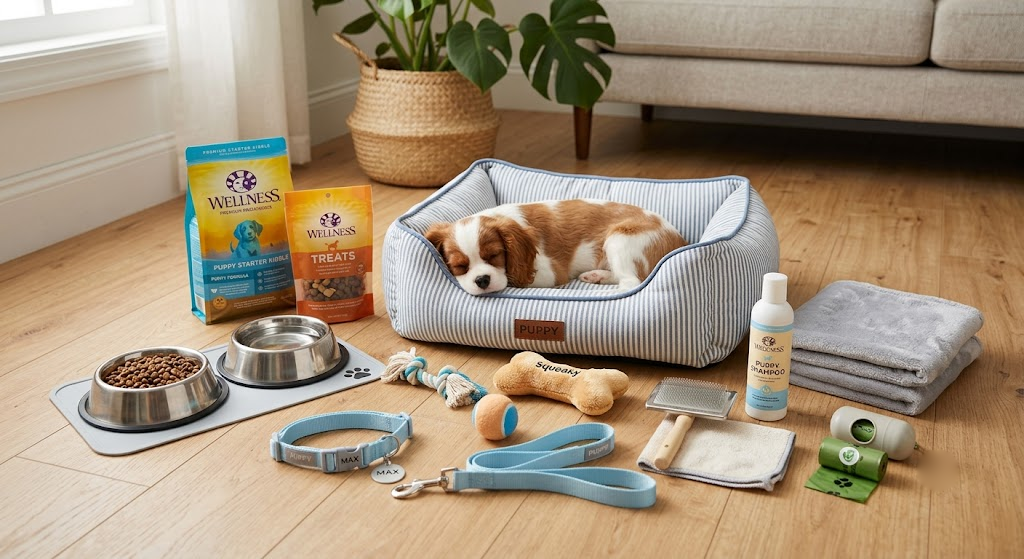
Every new puppy owner hits the same wall around week two: a garage full of stuff from the pet store and a dog who only cares about three things. A crate. A bowl. Something to chew that isn't your shoe. That's really the entire puzzle, and the good news is you can solve it for less than the cost of a nice dinner out.
A functional puppy starter kit runs under one hundred dollars if you buy for the actual animal in front of you instead of the aisle display screaming for your wallet. The rest, the plush heartbeat toys and the monogrammed everything, that stuff can wait.
I say this having watched friends drop three hundred bucks before their pup even came home, only to find the eighty-dollar orthopedic bed got shredded by day four. Puppies don't know luxury. They know teeth, smell, and routine. Build around that.
What Belongs in a Basic Puppy Starter Kit?
Strip away the marketing and a puppy needs shockingly little to thrive in those first few weeks. The debate you'll see across every dog forum, every breeder pack, every Reddit thread about new puppy supply lists, always circles back to the same short list of non-negotiables versus everything else that's just noise dressed up as necessity.
Non-Negotiable Core Items
A crate sized for growth, a stainless steel bowl set for food and water, a fixed or adjustable collar, a six to eight foot leash, a couple of chew-safe toys, and poop bags. That's it. That's the skeleton. Everyone from AKC's own new puppy checklist to random Facebook groups agrees on this much, even when they disagree on brand.
Nice-to-Have Add-Ons
A slow feeder bowl if your pup inhales food like it's being repossessed. A crate mat for cushioning. A basic grooming brush. A clicker if you're leaning toward clicker-based training. None of these make or break the first month, but they smooth it out.
Items You Can Skip At First
Elaborate activity centers. Multiple redundant toy sets. Fancy smart feeders. Premium beds before you know if your pup is a chewer. Save that money. Seriously, just don't.
How Do You Set Up a Safe Sleeping Space?
A pup's sleeping area is less about comfort and more about signal. It tells the animal where safety lives in this strange new house full of strange new smells.
Crate Size and Placement
Buy a crate sized for the adult dog, not the eight-week-old pup, and use a divider panel to shrink the space temporarily. Too much room and house training turns into a slog because the pup will happily pee in one corner and sleep in the other. Place it somewhere central, not banished to a laundry room, because isolation at this age tends to backfire into separation anxiety later.
Bedding and Comfort Aids
Skip the expensive orthopedic pad for now. A simple crate mat, something washable and chew-resistant, does the job until you know the pup's habits. A worn t-shirt with your scent on it works better than anything from a store shelf for those first few nights.
Den Training Basics
Dogs are den animals by instinct, and a crate used correctly becomes a refuge, not a cage. Feed meals inside it. Toss treats in randomly throughout the day. Never use it as punishment. This groundwork pays off fast once potty training starts in earnest.
What Food and Feeding Supplies Does a Puppy Need?
Bowls and Slow Feeders
Stainless steel wins here, hands down, over plastic or ceramic. It doesn't hold bacteria in scratches, doesn't chip, and survives the inevitable chewing phase better than anything else on the market. If your pup is an excited eater who finishes a bowl in four seconds flat, a slow feeder insert slows the pace and cuts down on bloat risk.
Choosing the Right Puppy Food
Stick with whatever the breeder or shelter sent the pup home with initially, even if it's not your first choice long term. The ASPCA's general dog care guidance backs this up, since abrupt diet changes tend to trigger stomach upset in young dogs whose digestive systems haven't stabilized yet. Transition slowly over a week or two if you want to switch brands.
Building a Feeding Schedule
Puppies between eight and twelve weeks generally need four meals a day, tapering to three meals once they hit the three to six month mark, according to feeding frequency standards from the ASPCA. Consistency matters more than the exact clock time. Same spots, same order, same portions.
Which Toys and Chews Are Worth Buying?
Teething and Chew-Safe Toys
A frozen chew toy, the kind you can run under water and stick in the freezer, does wonders for a teething pup around three to four months old. Rubber toys built for aggressive chewers last longer than plush ones, which get gutted within a day by most puppies.
Mental Stimulation Toys
Puzzle feeders and snuffle mats give a pup something to work at besides your furniture. This matters more than people expect, since bored puppies default to destructive behavior out of pure restlessness.
Toys to Avoid
Anything with small removable parts, cheap squeakers that pop out easily, or toys sized for a dog five times your pup's current weight. The AKC's puppy checklist flags oversized or poorly constructed chew toys as a recurring hazard in emergency vet visits, and honestly, it tracks with what most vets will tell you anecdotally too.
What Grooming Supplies Should You Have on Hand?
Nothing fancy required at the start. A soft-bristle brush, nail clippers with a safety guard so you don't hit the quick, and a gentle puppy shampoo cover the basics. Skip the professional-grade tools until you actually know your pup's coat type and tolerance for handling. A short-haired Chihuahua and a Golden Retriever puppy have wildly different grooming futures, and buying ahead of that knowledge just wastes money.
How Do You Prepare for Potty Training Before Puppy Arrives?
Buy enzymatic cleaner before the pup even arrives, not after the first accident. Regular household cleaners don't fully break down the scent markers in urine, and American Humane's housetraining resources make clear that residual scent is exactly what draws a pup back to the same spot repeatedly. Have potty pads ready if you're in an apartment without instant yard access, and map out a bathroom schedule tied to meals, naps, and playtime rather than the clock alone.
The Oregon Humane Society's potty training guidance emphasizes praising and treating the pup immediately outside, right at the moment of success, not after walking back inside. Timing there makes or breaks how fast the behavior sticks.
Supply Category | Budget Pick | Approx. Cost |
|---|---|---|
Crate | Wire collapsible, divider included | $30-40 |
Bowls | Stainless steel set, two-piece | $8-12 |
Leash & Collar | Nylon adjustable combo | $10-15 |
Chew Toys | Rubber teething set, 2-3 pack | $10-15 |
Potty Pads | 50-count tray-style | $12-18 |
Enzymatic Cleaner | 32 oz spray bottle | $8-10 |
What Health and Vet Care Should You Plan For?
Schedule that first vet visit within the first week home, no exceptions. Core vaccinations typically begin between six and eight weeks of age with boosters spaced every three to four weeks until the pup hits sixteen weeks, based on the ASPCA's vaccination guidelines.
AKC's puppy vaccination timeline adds distemper and parvovirus to that core list, with lifestyle vaccines like leptospirosis or bordetella layered in depending on your regional risk and whether daycare or boarding is in the pup's future.
Save every food package's lot number as you go. It sounds excessive until you need it. The FDA's guidance on tracking pet food lot numbers exists specifically because recalls happen more often than people assume, and having that number on hand speeds up any cross-reference against the agency's recall and withdrawal listings.
Which Training and Socialization Tools Help Most?
A basic treat pouch and small, high-value training treats go further than any gadget you could buy. Socialization matters just as much as obedience early on. The AVMA's literature review on socialization points to daily handling and varied tactile exposure between three and five weeks of age as shaping long-term temperament, and their broader socialization resources push owners toward structured exposure plans covering strangers, household noises, and everyday objects.
Don't wait too long to start group classes either. The AVSAB's position statement on puppy socialization argues supervised classes can safely begin as early as seven to eight weeks, well before the vaccine series finishes, as long as the environment is controlled. Waiting past twelve to fourteen weeks carries real cost. A JAVMA study on puppy socialization found that limited social and sensory exposure past that window correlates with heightened fear responses that follow a dog into adulthood.
A quick reminder here that's easy to forget in the excitement: avoid waving fingers or hands in a puppy's face during play, since the ASPCA's guidance on mouthing and nipping notes this habit inadvertently teaches puppies that human skin is a fair game toy.
What Documents and ID Should You Keep Ready?
Vaccination records, a microchip number if the breeder already implanted one, and a temporary ID tag with your phone number should all travel with the pup from day one. PetMD's new puppy checklist lists immediate ID and parasite prevention as priorities that shouldn't slide to week two, and honestly, that's the right instinct. Pups slip leashes and squeeze through fences more often than owners expect.
How Do You Keep the Starter Kit Under One Hundred Dollars?
- Buy a crate one size up with a divider instead of upgrading crates twice as the pup grows.
- Choose stainless steel over ceramic or ambitious tech gadgets that promise automated everything.
- Skip the designer bed until you know if your pup is a shredder.
- Get a basic six-foot leash instead of a retractable one, which trainers generally discourage anyway for young pups still learning leash manners.
- Buy treats in bulk and portion them yourself rather than paying for pre-packaged training treat pouches.
Add up crate, bowls, leash, collar, a couple of chew toys, potty pads, and enzymatic cleaner, and you land comfortably under the hundred-dollar mark even at retail pricing, before any sales.
What Should You Buy Later Instead of Right Away?
Wait on the orthopedic bed, the fancy grooming table, breed-specific harnesses beyond the basic starter size, and any elaborate outdoor gear like hiking packs. Your pup's adult size, coat type, and personality reveal themselves over the first few months, and buying ahead of that just guesses blind. A large-breed puppy might outgrow three collars before reaching six months old anyway.
FAQ
Do I really need a crate if I plan to co-sleep with my puppy eventually? Yes, at least early on. Crate training supports potty training timing and gives the pup a den-like retreat, even if the long-term plan involves a shared bed.
How many chew toys does one puppy actually need? Two or three rotated toys beat a basket of ten. Rotation keeps interest higher than sheer volume.
Is a harness better than a collar for a new puppy? Both have a place. AKC's checklist recommends having a properly sized harness available for leash training, since it reduces neck strain for pups still learning not to pull.
Conclusion
The whole point of a starter kit is removing friction, not showing off. A crate that functions as a den, bowls that survive chewing, a feeding rhythm the pup can predict, and toys that hold up under real puppy teeth, that's the whole game.
Everything past that is optional polish you can add once you actually know the dog you're raising. Save the fancy stuff for later. Spend the first hundred dollars on function, and spend your actual energy on routine and consistency, because that's what a pup remembers anyway.