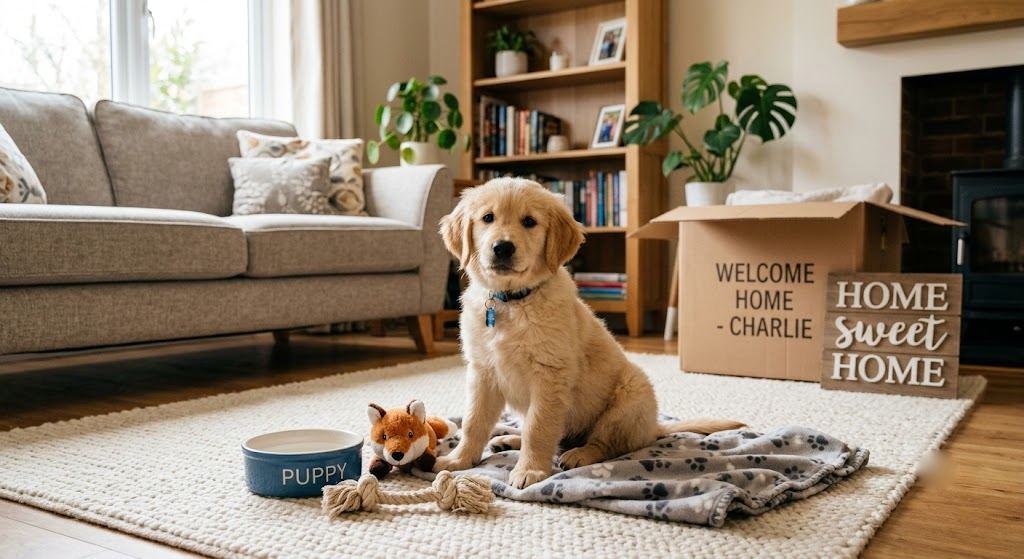
There's a specific kind of panic that hits around day four. You brought this puppy home expecting cuddles and instead you got a hollow-eyed creature who won't touch the food you spent forty bucks on, and now you're up at 2 a.m. googling "why does my puppy hate me." Breathe. He doesn't hate you. He's just not settled yet, and the truth about how long that takes is messier than most people want to hear.
Most pups need somewhere between one and three weeks before they stop acting like a hostage and start acting like a resident. But full, bone-deep comfort, the kind where your dog trusts the walls, the noises, and you completely, can take up to three months. That's not a guess. It's the pattern vets and shelter staff see over and over, and it's usually explained through what's called the 3-3-3 rule.
What Is the 3-3-3 Rule for New Puppies?
The 3-3-3 rule is a framework, not a law of physics, but it's a genuinely useful one. It breaks the adjustment period into three chunks: three days, three weeks, three months. Each phase has its own emotional texture, and knowing what's "normal" for each stage keeps new owners from panicking over behavior that's actually right on schedule. Preventive Vet lays out this exact breakdown in its guide on the new dog adjustment period, and shelters use nearly identical language when prepping adopters.
First 3 days
This is decompression. Your puppy just left everything familiar, littermates, the smell of his mother, maybe the breeder's living room, and landed in a house that smells like nothing he knows. Expect him to be quiet. Too quiet, almost. Some pups lose their appetite for the first day or two. Some hide under furniture. Some sleep way more than you'd expect, and others can't settle at all. None of this is a red flag yet. It's shock, plain and simple, and the ASPCA's own guidance on pet adjustment periods treats this stretch as the most fragile window of the whole process.
First 3 weeks
By week two or three, personality starts leaking through. The puppy who wouldn't eat is now stealing socks. He's testing boundaries, figuring out where the water bowl lives, learning that the sound of the leash means a walk is coming. This is when routines start to matter more than comfort items. Potty schedules, feeding times, nap windows, all of it starts clicking into a rhythm, assuming you've been consistent (more on that later, because consistency is the whole game).
First 3 months
This is where trust actually roots itself. A puppy at the three-month mark isn't just tolerating your home, he's decided it's his territory. Confidence shows up in small ways, tail up during walks, curiosity instead of caution around new sounds, maybe even a little attitude when you take away a toy. Interestingly, a multi-shelter tracking study out of Ohio State found that by the 180-day mark, essentially all guardians reported their dogs had fully adjusted to their new environments, with the vast majority rating overall behavior as good or excellent. Three months isn't the finish line, but it's close.
What Factors Change How Fast a Puppy Adjusts?
No two pups run this timeline the same way, and honestly, treating the 3-3-3 rule like gospel is where a lot of new owners get frustrated. Some dogs blow past it. Others need double the time. A few variables explain most of the difference.
Age and socialization history
A puppy who left the litter too early, before the widely recommended 8-week mark, tends to show more fear and clingier attachment behavior once he's home. Research published on PMC tracking 107 dogs found early removal from littermates elevated signs of fear and adjustment stress well past what's typical. The AKC backs this up too, pointing to eight weeks as the biological threshold where a pup is developmentally ready to bond with a new family instead of his mother and littermates.
Temperament and breed traits
Some breeds are wired for adaptability. Labradors, for instance, tend to shrug off new environments faster than, say, a naturally wary breed like a Chow Chow or a Basenji. Temperament matters just as much as breed standard, though. I've met bold, outgoing pups who acted like they owned the house by day two, and I've met littermates from the same batch who took a full month just to walk confidently across the living room. Genetics load the dice, but they don't decide the outcome alone.
Home environment and household size
A quiet apartment with one adult is a different adjustment than a house full of kids, other pets, and constant foot traffic. More stimulation isn't automatically bad, but it does mean more sensory input for a nervous system that's already overwhelmed. Households with multiple pets sometimes see slower adjustment simply because the puppy has more relationships to sort out, not just with humans, but with the existing pack.
How Do You Know Your Puppy Is Settling In?
There's a real difference between a puppy who's quiet because he's shut down and one who's quiet because he's finally relaxed. Knowing the difference saves you a lot of unnecessary worry.
Eating and sleeping normally
A settled pup eats on schedule without hesitation and sleeps in stretches that make sense for his age, generally a lot, but not in a way that feels like avoidance. If your dog's appetite bounces back within the first week and stays consistent, that's one of the clearest markers of adjustment.
Relaxed body language
Watch the tail. Watch the ears. A pup who's comfortable holds a loose, wagging tail, soft eyes, and a body that isn't coiled or crouched. Compare that to a dog frozen in place with his tail tucked, and you've got two very different emotional states.
Curiosity instead of hiding
Confidence shows up as nosiness. He wants to sniff the corner of the room he ignored yesterday. He follows you into the kitchen instead of staying glued to the crate. Curiosity is one of the most reliable behavioral signs that the new environment has stopped feeling threatening.
What Are Signs Your Puppy Is Struggling to Adapt?
Some pups need more support than others, and there's no shame in that. But there's a line between normal decompression and something that needs intervention.
Prolonged appetite loss or lethargy
A day or two of picky eating is normal. A week of it isn't. If your puppy is still refusing food or seems unusually flat after seven to ten days, that's outside the range of typical adjustment.
Excessive whining or destructive behavior
Some whining at bedtime is expected, especially the first few nights. Constant whining, panicked barking when left alone even briefly, or chewing that goes beyond normal puppy curiosity can point toward developing separation anxiety rather than simple restlessness.
Ongoing fear or avoidance
If your pup is still bolting from normal household sounds, refusing to approach family members, or hiding for most of the day well into week three or four, something's off. The Royal Veterinary College's research on early environmental experiences found direct links between poor early exposure and lasting separation-related behaviors in young dogs, which is worth knowing if your puppy's fear doesn't seem to be fading on its own timeline.
How Can You Help a Puppy Settle In Faster?
You can't force trust, but you can absolutely speed up the process with the right setup.
- Set a consistent daily routine: same wake time, same meals, same bathroom breaks, same bedtime. Predictability is the single biggest lever you have. It tells the puppy's nervous system what to expect, which lowers overall stress far faster than any toy or treat will.
- Puppy-proof the home before arrival: cords tucked away, chemicals locked up, a designated space with a crate or bed ready to go. Walking into a home that's already prepared for him, rather than one that's being rearranged around him, cuts down on chaotic first impressions.
- Manage introductions to people and pets: no overwhelming welcome parties. Let the puppy approach family members and existing pets at his own pace instead of forcing face-to-face greetings in the first hour.
The American Animal Hospital Association echoes this in its own planning guide, noting that the initial household adjustment period is intense enough on its own without adding unnecessary social pressure on top of it.
What Should You Do During the First Night Home?
Keep it boring. Boring is good. Set up the crate near your bed if you can, close enough that your pup can hear you breathing, because total isolation on night one tends to backfire. Skip long car rides or errands that day if possible, since travel plus a brand-new environment is a lot of change packed into one day. A warm water bottle wrapped in a towel and a shirt that smells like you can work wonders for a pup who's used to sleeping in a pile of littermates and suddenly finds himself alone. VCA Animal Hospitals recommends avoiding extended solo time during this early window entirely, suggesting owners not leave a newly transitioned dog alone for the first week or two if it can be helped.
What Common Mistakes Slow Down a Puppy's Adjustment?
Overwhelming a puppy with visitors in the first 48 hours is probably the most common misstep, right alongside skipping a routine because "he just got here, let's not stress him with schedules yet." That logic is backwards. Inconsistent feeding times, letting the puppy sleep wherever he wants one night and forcing the crate the next, or constantly changing up walk routes all extend the adjustment window rather than shortening it. Another sneaky one: not budgeting for pet insurance early, then panicking over vet bills when a stress-related stomach issue pops up in week two. It happens more than people admit.
When Should You Contact a Vet or Trainer About Adjustment Issues?
If appetite loss stretches past a week, if lethargy seems severe rather than mild, or if fear behavior shows no improvement after three to four weeks, it's time to call a vet to rule out illness before assuming it's purely behavioral. A dog trainer becomes useful when the issue looks more like escalating anxiety, aggression, or destructive behavior that isn't fading with routine and patience. There's no shame in bringing in support early. Waiting it out rarely helps when the underlying issue is medical or deeply rooted in fear.
FAQ
Is it normal for a puppy to not eat the first day? Yes, mild appetite loss in the first 24 to 48 hours is common and usually resolves on its own.
Should I let my puppy sleep in my bed the first night? Most trainers suggest keeping him close in a crate rather than in the bed, to avoid setting a precedent you'll need to undo later.
Does age at adoption affect adjustment speed? Yes, pups adopted at or before eight weeks without proper socialization tend to show more fear-based behavior during transition.
Conclusion
Somewhere between the frantic first night and that moment, usually a few months in, when your puppy flops belly-up in the middle of the living room like he's owned the place his whole life, adjustment happens. It's rarely a straight line. There will be good days that feel like a breakthrough and bad days that feel like a setback. That's not failure. That's just what settling in actually looks like, for pups and, frankly, for the humans learning to live with them too.